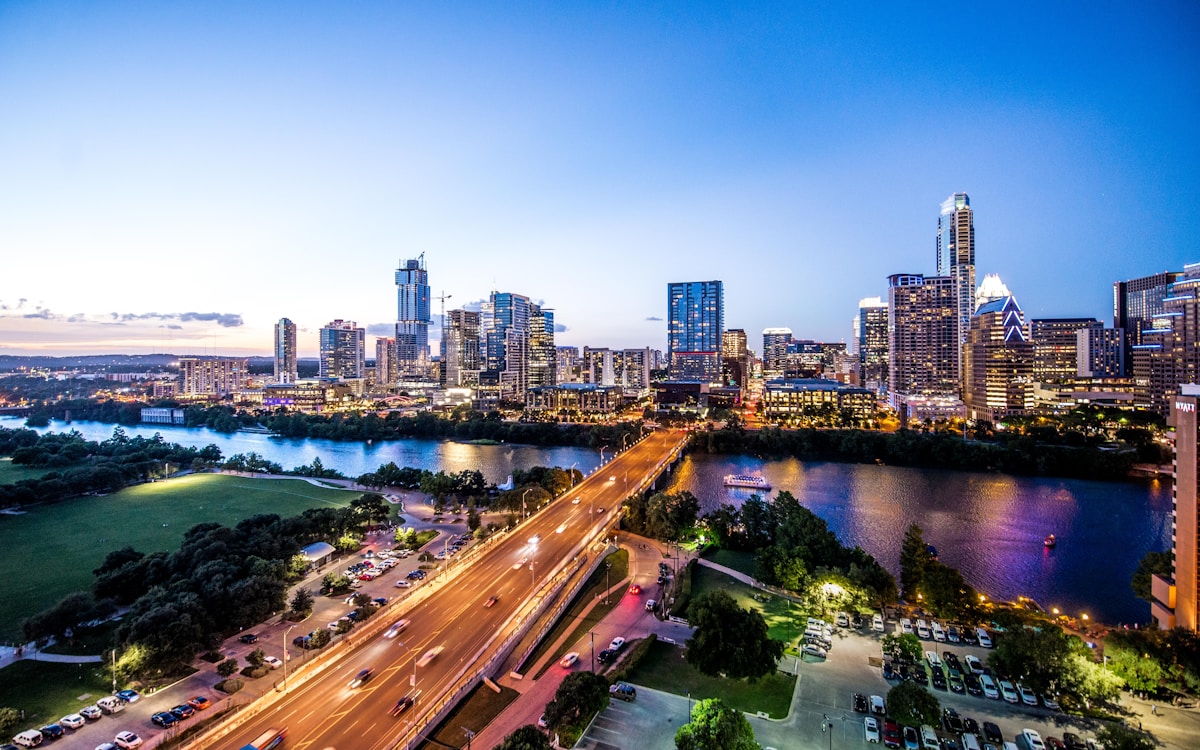
If you pull up a map of where US economic growth is concentrated right now, one state stands out from the rest. Texas has been on a run that economists are still trying to fully explain - faster job creation than California, faster population growth than Florida, and a GDP that now ranks Texas as the ninth-largest economy in the entire world if it were its own country. That is bigger than Canada. Bigger than South Korea. Bigger than Russia.
So what is actually happening here? And why now?
The Numbers First
Between 2020 and 2025, Texas added more than 2.5 million residents - the largest absolute population gain of any state in that period. Its GDP grew at roughly 5 to 6 percent annually in real terms, outpacing the national average by a wide margin. The state gained over 1.5 million new jobs in the same window, and unemployment has consistently stayed below the national rate.
These are not soft numbers. They come from the Bureau of Economic Analysis, the Census Bureau, and the Bureau of Labor Statistics. Texas is not just doing well - it is lapping the field.
No State Income Tax - The Foundation of Everything
Start here. Texas has no personal state income tax. For a high earner moving from California (where the top marginal rate hits 13.3 percent) or New York (where state and city combined can approach 15 percent), the math is immediate and enormous. A software engineer making $300,000 a year saves somewhere between $25,000 and $40,000 annually just by crossing the state line.
That is not a rounding error. That is a car payment, a vacation, or a down payment fund - every single year. It compounds. And it shows up in migration data with stunning consistency.
Texas funds its government through sales tax and property tax instead, which distributes the burden more broadly and keeps the state competitive for businesses as well. Corporations pay no state income tax either, which matters enormously when a CFO is modeling where to put a headquarters.
The Corporate Exodus Into Texas

The list of companies that have moved their headquarters to Texas in the last five years reads like a Fortune 500 index. Tesla moved its global HQ to Austin. Oracle left Silicon Valley for Austin. HP Enterprise moved to Houston. Charles Schwab relocated to Westlake. Toyota's North American HQ is in Plano. CBRE, McKesson, Hewlett Packard - the list keeps going.
This is not random. These companies did not flip a coin. They ran detailed analyses of operating costs, regulatory environment, labor availability, tax burden, and quality of life for executives. Texas won those analyses - repeatedly, across industries, across company sizes.
When a Fortune 500 company moves its headquarters, it does not come alone. It brings senior executives, legal teams, finance teams, IT departments. Those people buy houses, hire contractors, use services, start businesses. The economic ripple from a single HQ relocation is enormous.
Austin: The Tech Migration That Changed Everything
Austin deserves its own section because it fundamentally changed the texture of what Texas is. Ten years ago, Austin was a mid-sized city known for live music, the University of Texas, and South by Southwest. Today it is a legitimate tier-one tech hub.
Google, Apple, Amazon, Facebook (Meta), and Salesforce all have significant Austin offices - not satellite outposts but major engineering and operations centers. The city now has more tech workers per capita than Seattle. Venture capital funding into Austin-based startups has exploded, going from roughly $1 billion annually in 2015 to over $6 billion in recent years.
Remote work was the accelerant. When the pandemic decoupled tech workers from San Francisco zip codes, many of them did the math quickly. A $2.5 million house in Palo Alto could become a $600,000 house in Austin with no state income tax and 300 sunny days a year. Thousands made that move. They brought their salaries, their networks, and their companies with them.
Energy - Still the Backbone
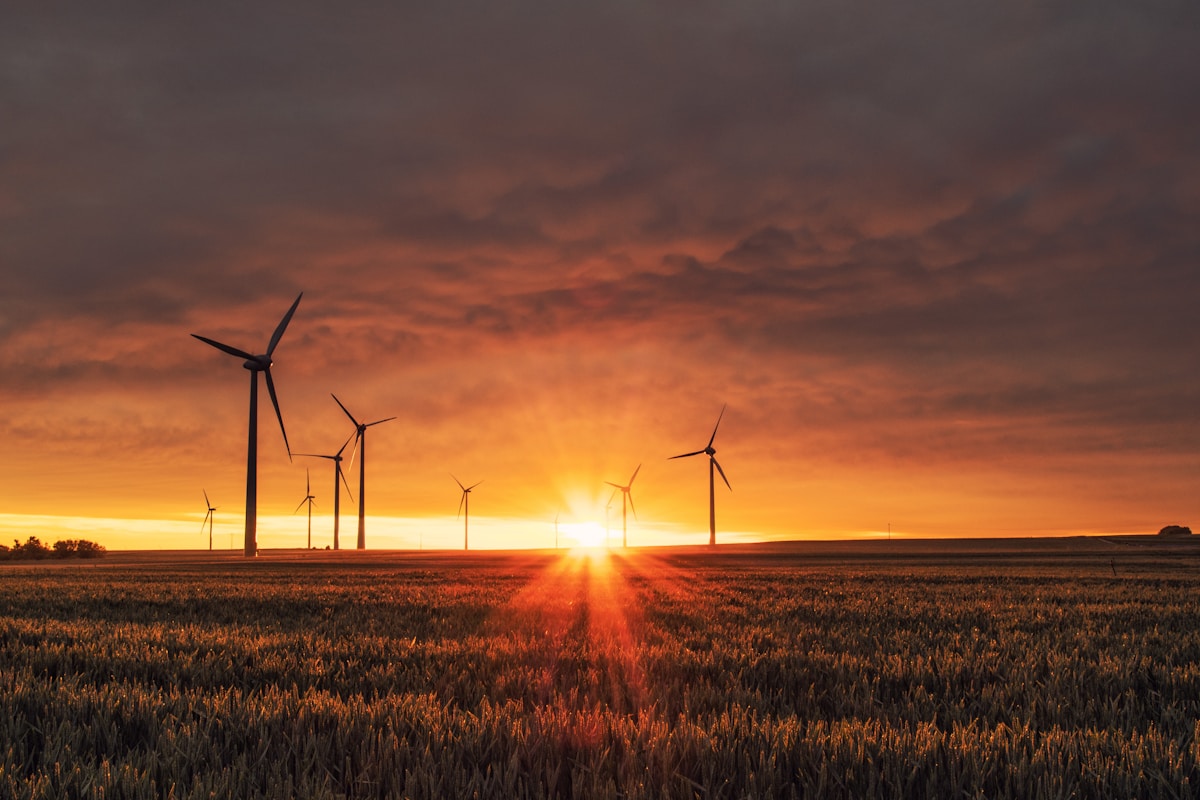
Texas produces more oil than any other US state - about 40 percent of total US crude production. The Permian Basin alone, straddling West Texas and southeast New Mexico, is one of the most productive oil fields in the world. When energy prices rise, Texas benefits disproportionately. The state's economy has a built-in revenue amplifier that most other states lack.
But here is what surprises many people: Texas is also the top wind energy producer in the country, generating more wind power than the next three states combined. It has massive and growing solar capacity as well. The energy sector in Texas is not a relic of the past - it is a diversified, forward-looking industry that spans fossil fuels, renewables, and increasingly energy storage and grid technology.
The ERCOT grid - Texas's independent power market - is unusual in that it operates separately from the national grid. That creates both vulnerabilities (as the 2021 winter storm showed) and opportunities, as Texas can move faster on grid innovation without federal regulatory drag.
Regulatory and Business Climate
Texas has consistently ranked among the top three states in the country for business friendliness, according to surveys by the US Chamber of Commerce, Chief Executive magazine, and Thumbtack. The regulatory environment is lean compared to California or New York. Permitting timelines are shorter. Labor laws are less restrictive. Environmental regulations, while still present, are lighter than in coastal blue states.
This is a deliberate policy choice, not an accident. Texas governors and legislatures have actively competed for business relocations for decades. They offer incentives, fast-track permits, and maintain a political environment that is seen as stable and predictable for business planning.
The Challenges Texas Has to Face
It would not be honest to write about Texas's growth without acknowledging the real problems.
The 2021 winter storm that knocked out power across the state for days - killing hundreds and causing hundreds of billions in economic damage - exposed genuine vulnerabilities in the power grid. Progress has been made since, but the underlying debate over ERCOT's structure and winterization investment is not resolved.
Property taxes in Texas are high - some of the highest in the nation - which offsets some of the income tax advantage, especially for homeowners. Housing affordability has deteriorated sharply in Austin and Dallas as demand outstripped supply.
Water is a long-term concern. Texas is a dry state in large parts, and population growth is putting pressure on aquifers and river systems that were already stretched. This is not a crisis today, but it is a real constraint on how long the growth story can continue at its current pace.
And the political environment - whatever your view of it - creates uncertainty. Some companies and workers who would otherwise move to Texas choose not to, citing social policy concerns. That is a real factor in talent recruitment, particularly for companies trying to attract diverse workforces.
Can Texas Keep It Up?
The fundamentals are strong enough that the growth will continue - but probably not at the same pace. The extreme migration surge of 2020 to 2023 was partly pandemic-driven and has moderated. Austin's housing market, once shockingly affordable compared to San Francisco, now looks like a lot of other expensive cities.
But the structural advantages - no income tax, energy dominance, a diversified and growing tech sector, central geography, and a policy environment that actively courts business - are not going away. Texas will remain one of the top two or three economic performers in the US for the foreseeable future.
If you are thinking about where US economic energy is concentrated right now, the answer is pretty clearly in the South and Southwest. And within that region, Texas is the center of gravity.