Indian food is among the world's most complex, regional, and deeply spiced cuisines. In the United States, it's also one of the most unevenly distributed. Depending on where you live, "Indian food" might mean an extraordinary 40-item menu drawing from six regional traditions — or it might mean one restaurant in a strip mall serving a generic tikka masala. Where you go matters enormously.
New Jersey: The Overlooked Capital
If Indian food professionals and serious eaters were polled, New Jersey would rank extremely high — possibly first. The reason is its enormous South Asian diaspora population, concentrated particularly in Edison, Iselin, and the surrounding "Little India" corridor. This is not restaurant-for-Americans Indian food. This is Indian food made by and for Indian families: raw mango pickle, fresh dosa with sambar, chaat that matches what you'd get in Delhi or Mumbai, and sweet shops selling mithai that rivals anything in India.
The shops on Oak Tree Road in Edison are a pilgrimage destination for Indian food lovers across the East Coast. Grocery stores full of fresh curry leaves, asafoetida, and forty varieties of dal. Restaurants that have no incentive to dial down the spice for Western palates because their customers are Indian. It's the real thing.
New York: The Most Diverse
New York City's Indian food scene is extraordinary in its breadth. You can find:
- South Indian (Tamil, Keralite, Andhra) restaurants serving idli, rasam, and fish curry
- North Indian Punjabi restaurants with clay-oven tandoor bread and rich curries
- Gujarati vegetarian thali spots with dozens of small dishes
- Modern Indian fine dining — restaurants like Baar Baar and Babu Ji that rework classics for a sophisticated audience
- Street food: pani puri, vada pav, bhel puri from stalls in Jackson Heights, Queens
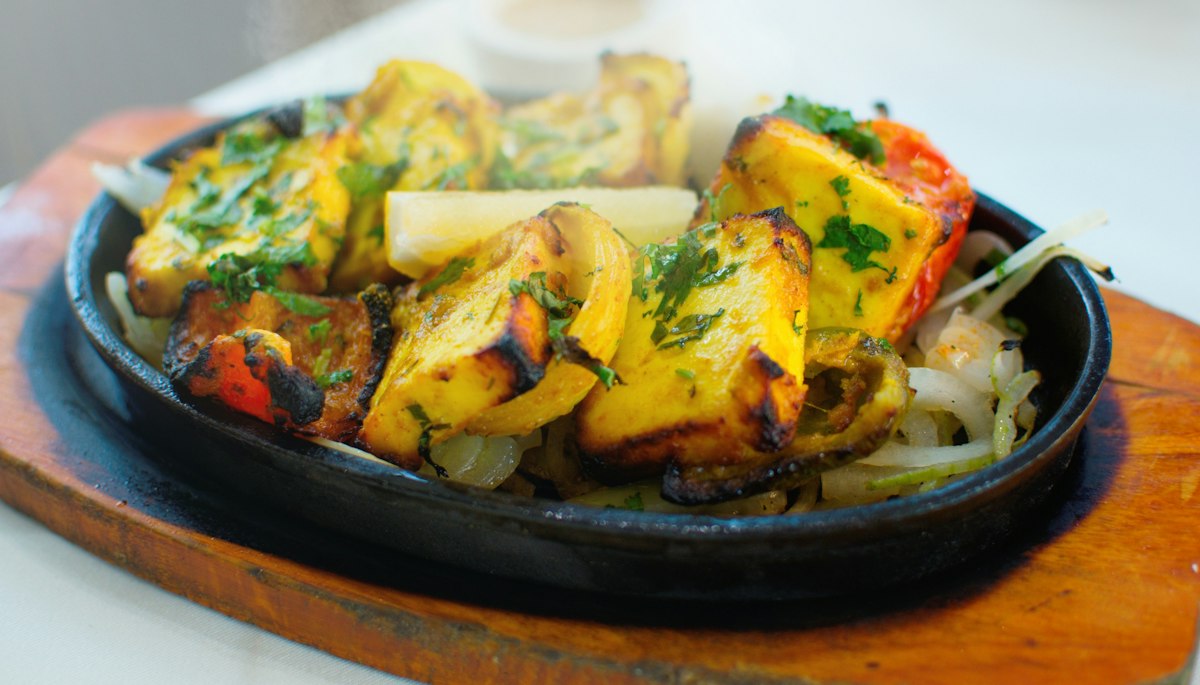
Jackson Heights in Queens is one of the best places in America to eat Indian food of any kind. The density of restaurants, the quality, and the variety are remarkable.
California: The Tech-Boom Effect
California, particularly the San Francisco Bay Area and Silicon Valley, has seen an enormous Indian food explosion driven by the tech industry's massive South Asian workforce. The South Bay — Sunnyvale, Santa Clara, Fremont, Milpitas — has Indian restaurants that rival anything in New Jersey or New York, with a particular strength in South Indian food (many tech workers from Tamil Nadu and Andhra Pradesh), vegetarian Jain cuisine, and regional specialties rarely found elsewhere in the US.
Fremont's Blacow Road and Sunnyvale's Murphy Avenue corridors have Indian grocery stores, sweet shops, and restaurants that feel like transplanted Bangalore neighborhoods. Los Angeles, meanwhile, has a strong Gujarati and Punjabi community that drives solid North Indian cooking.
Texas: A Surprising Contender
Houston and Dallas both have substantial Indian American communities — large enough to support genuinely excellent restaurants. Houston's Hillcroft corridor, known locally as "Little India," offers South Indian, Hyderabadi, and Indian-Chinese options rarely seen in smaller markets. Texas's lower cost of living also means Indian restaurants can operate without the price pressure of New York or San Francisco, often delivering better value.
Illinois: Chicago's Underrated Scene
Chicago has a concentrated Indian food district along Devon Avenue on the far north side — a remarkable stretch of grocery stores, sweet shops, restaurants, and sari boutiques that is among the most authentic Indian food districts in the US. Devon Avenue has been serving Chicago's Indian community for decades and shows no signs of slowing down.
The Verdict
For depth, authenticity, and the sense that you're eating food not designed for Western approximation, New Jersey's Edison corridor and New York's Jackson Heights are the peaks. For variety and modern Indian cuisine, New York City overall wins. For West Coast excellence tied to the tech diaspora, the Bay Area is exceptional.
The worst states for Indian food? Generally the Great Plains and Deep South — not because the people aren't lovely, but because the population density for a South Asian diaspora community large enough to support diverse, authentic cooking simply hasn't developed there yet. Most midsize American cities will have one or two decent Indian restaurants. They may be fine. But they won't be what you find in Edison, NJ on a Saturday afternoon when the whole community is out eating together.