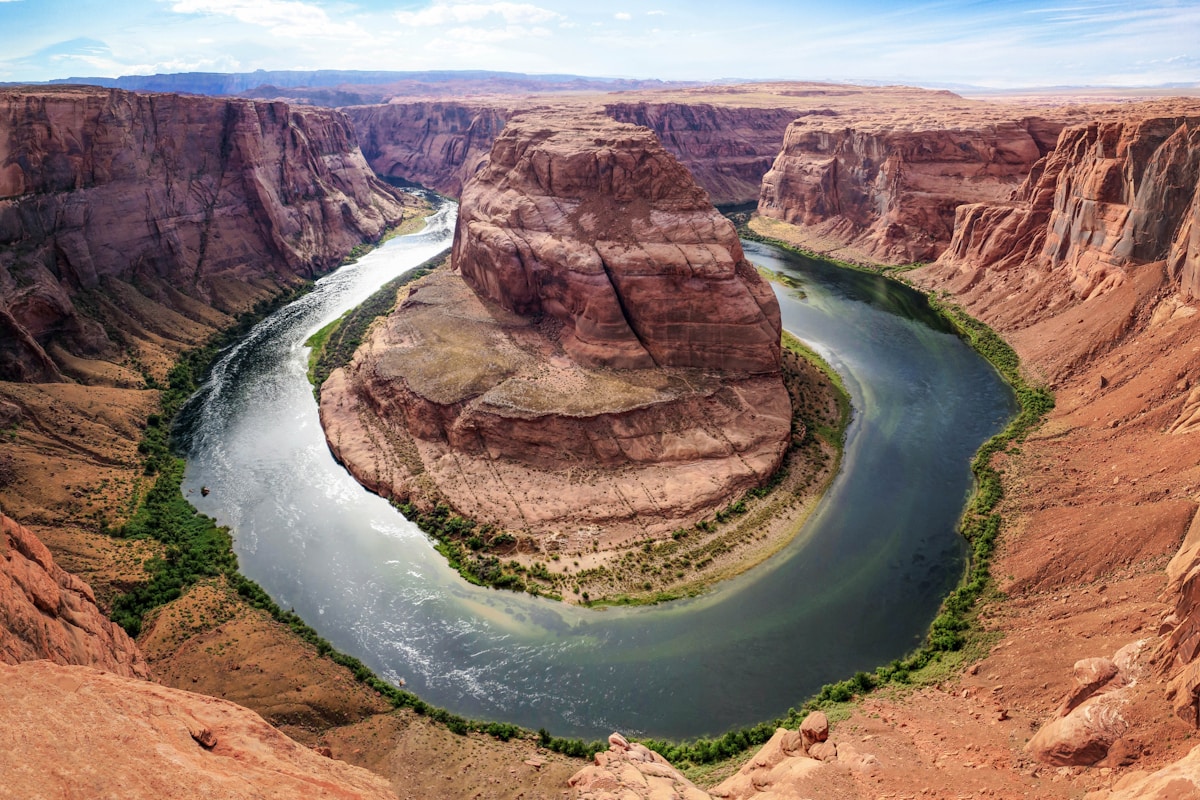
The Grand Canyon is 277 miles long, up to 18 miles wide, and over a mile deep. More than six million people visit Arizona every year to see it — and a surprising number of them show up completely unprepared. Here's everything you need to know to have a safe, memorable visit.
1. There Are Two Main Rims — and They're Very Different
Most visitors go to the South Rim, and for good reason: it's open year-round, has the most infrastructure (lodges, restaurants, visitor centers), and offers the classic Grand Canyon views. The North Rim is higher, quieter, receives far fewer visitors, and is only open from mid-May to mid-October due to snow. The two rims are only 10 miles apart as the crow flies but a 215-mile drive from each other.
If this is your first visit: go to the South Rim.
2. Best Time to Visit
The Grand Canyon is open year-round, but conditions vary dramatically.

- Spring (March–May): The best overall time. Temperatures are mild at the rim (50–70°F), trails are less crowded than summer, and wildflowers appear. Ideal for first-timers and hikers.
- Summer (June–August): Busiest season. The rim is comfortable at 70–85°F, but the inner canyon floor can hit 110°F+. Hiking down in summer is genuinely dangerous without proper preparation. Lodges book out months in advance.
- Fall (September–November): Excellent. Crowds drop sharply after Labor Day, temperatures moderate, and the light for photography is spectacular.
- Winter (December–February): Surprisingly good if you dress for it. Snow on the canyon rim is stunning, crowds are minimal, and prices drop. Some trails may be icy. North Rim is closed.
3. The Hike Down Is Optional — The View from the Rim Is World-Class
You do not need to hike into the canyon to experience it. The Rim Trail runs 13 miles along the South Rim and is nearly flat, paved in sections, and offers continuous canyon views. Many of the most iconic viewpoints — Mather Point, Yavapai Point, Desert View — are accessible directly from parking areas or free shuttle buses.
4. If You Do Hike: Don't Go to the Bottom and Back in One Day
The National Park Service explicitly warns against it. The most popular trail, Bright Angel Trail, is not a round-trip day hike. The distance is manageable, but the combination of extreme heat at the bottom, steep elevation gain on the return, and thin air at the rim kills people every year. Go down 1.5 miles to Mile-and-a-Half Resthouse, have water, and turn back. Carry at least one liter per hour of active hiking. Electrolyte tablets are worth bringing.
5. Permits for Inner Canyon Overnight Stays Are Extremely Competitive
To camp inside the canyon — at Bright Angel Campground or Cottonwood — you need a backcountry permit. These are released four months in advance and are gone within minutes. Apply online through the NPS permit system starting exactly on the 1st of the month, four months before your trip. Book Phantom Ranch (the only lodge inside the canyon) even earlier — it has its own lottery system.
6. Entry Fees and the America the Beautiful Pass
A 7-day vehicle pass costs $35. If you're visiting more than a couple of national parks in a year, the America the Beautiful Annual Pass ($80) pays for itself quickly and covers entry to all federal lands. Available online or at the entrance gate.
7. Lodging on the Rim Books Out Months in Advance
El Tovar (the historic lodge right on the South Rim) and Bright Angel Lodge are both excellent and wildly popular. For summer visits, expect to book 6 months out. If you miss the window, staying in Tusayan (just outside the park's South entrance, 7 miles from the rim) or Williams (60 miles away) are practical alternatives.

8. Water at the Canyon Bottom Is Drinkable — But Carry Enough Going Down
Bright Angel Trail has water stations at the 1.5-mile and 3-mile resthousees (seasonal) and at Indian Garden. South Kaibab Trail has no water until the bottom. Know your trail before you leave.
9. Mule Rides Are a Real Option
Guided mule trips into the canyon have operated since 1887. Day rides go down to Plateau Point, overnight trips go to Phantom Ranch. They're not cheap but they're an authentic Grand Canyon experience and suitable for people who can't hike. Book through the park's official concessionaire — months in advance for popular dates.
10. The Skywalk Is Not in Grand Canyon National Park
The Grand Canyon Skywalk — the glass horseshoe walkway 4,000 feet above the canyon — is on the Hualapai Tribe's land at Grand Canyon West, about 125 miles from the main South Rim. It's a completely separate destination and requires a separate tour package (not covered by the NPS pass). It's worth seeing if you're in the area, but don't confuse it with the main canyon experience.
11. Sunrise and Sunset Are Worth Setting an Alarm For
The canyon's colors shift dramatically with the light. At sunrise and sunset, the layered red, orange, and purple rock glows in ways photographs can barely capture. Mather Point and Yavapai Observation Station are the most popular sunrise spots. Arrive 30 minutes early — other people have the same idea.
12. Cell Service Is Limited Inside the Park
Download offline maps before you go. Service at the rim is patchy; inside the canyon there's essentially none. Make sure your hiking group knows the plan before you split up. A personal locator beacon (PLB) is worth considering for backcountry trips.
Getting There
The nearest major airport is Flagstaff Pulliam Airport (FLG), about 80 miles from the South Rim. Phoenix Sky Harbor (PHX) is 230 miles away and has far more flight options. There is no train service directly to the park, though the Grand Canyon Railway runs a scenic tourist train from Williams.
The Grand Canyon rewards preparation. If you plan your timing, book accommodation early, carry water seriously, and respect the scale of what you're dealing with — it will be one of the most unforgettable places you ever stand.