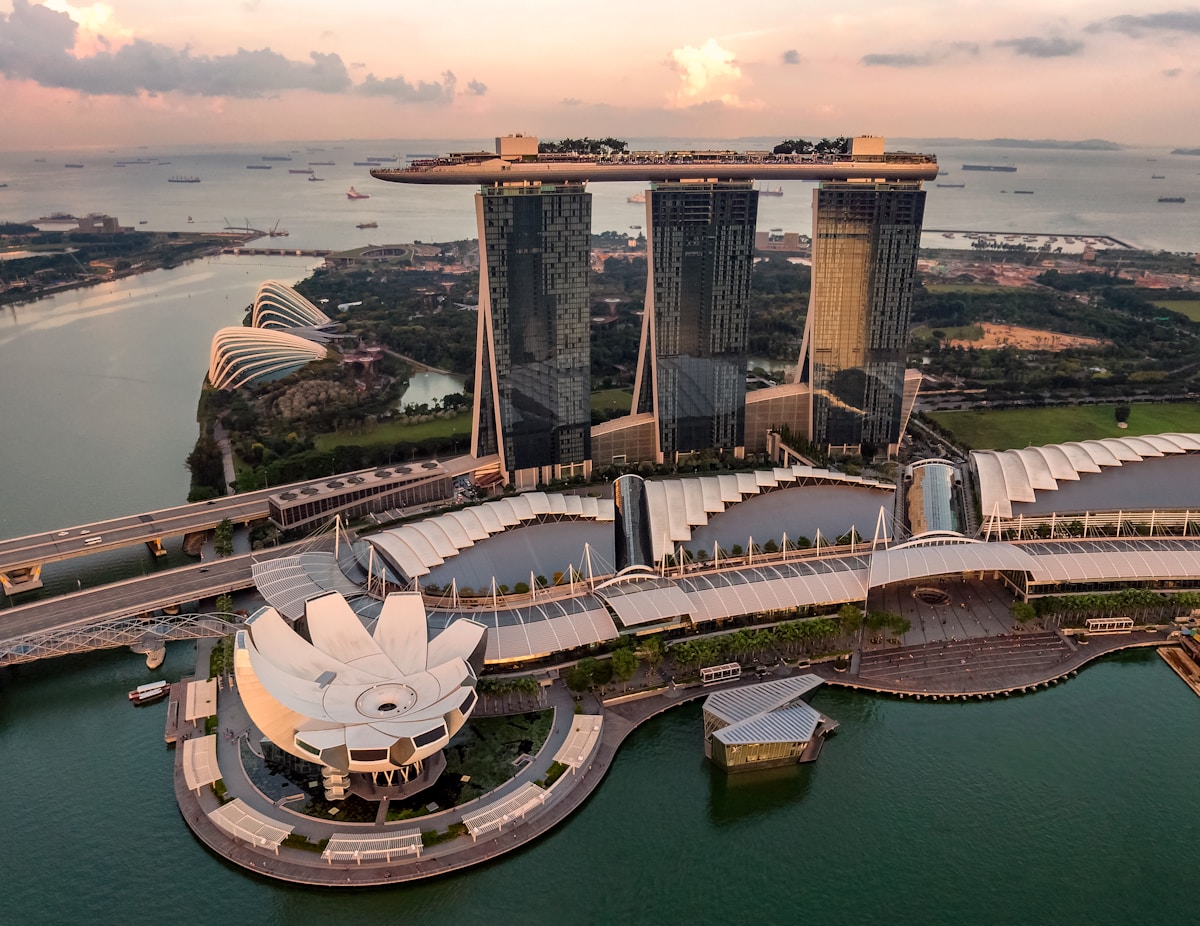
Singapore is one of the most remarkable economic stories of the modern era. In fewer than 60 years, this island city-state transformed itself from a colonial backwater with no natural resources into one of the wealthiest, most competitive economies on the planet. Today it is the undisputed business capital of Southeast Asia — and a serious rival to Hong Kong, Zurich, and New York as a global financial hub. If you are thinking about setting up a company, expanding into Asia, or simply understanding why Singapore punches so far above its weight, this guide covers everything you need to know.
Why Singapore? The Core Advantages
Singapore's appeal to businesses is not accidental — it was engineered through decades of deliberate policy. The country consistently scores at or near the top of global competitiveness rankings. The World Bank's Doing Business Index, the IMD World Competitiveness Ranking, and the Global Innovation Index have all placed Singapore in the top three. Here is why:
- Speed of incorporation. A new private limited company (Pte Ltd) can be registered with the Accounting and Corporate Regulatory Authority (ACRA) in as little as 15 minutes online. The process is entirely digital, transparent, and inexpensive — registration fees start at around S$315.
- Low corporate tax. Singapore's headline corporate tax rate is 17%, among the lowest in Asia. But the effective rate for small and medium businesses is far lower: partial tax exemption means the first S$100,000 of chargeable income is 75% exempt, and the next S$100,000 is 50% exempt. Many early-stage companies pay close to zero corporate tax in their first few years.
- No capital gains tax. Singapore does not impose capital gains tax. Dividends paid to shareholders are also exempt from additional withholding tax under the one-tier tax system — meaning profits are taxed once at the corporate level and distributed freely.
- An extensive treaty network. Singapore has Double Taxation Agreements (DTAs) with over 90 countries, making it highly efficient as a holding company jurisdiction for regional operations across Asia.
- Rule of law. Singapore's judiciary is consistently rated as one of the most independent, efficient, and corruption-free in the world. Contracts are enforceable, intellectual property is protected, and business disputes are resolved predictably.

Key Industries Driving Singapore's Economy
Financial Services and Fintech
Singapore is Asia's premier financial centre. The Monetary Authority of Singapore (MAS) — which acts as both central bank and financial regulator — has cultivated one of the world's most sophisticated banking and capital markets ecosystems. Over 200 banks operate in Singapore, including the regional headquarters of virtually every major global bank. The asset management industry manages over US$4 trillion from Singapore. The city-state is also one of the world's top three foreign exchange trading centres, behind only London and New York. Singapore's fintech sector has exploded over the past decade — the country is home to over 1,500 fintech firms including major players in payments, wealthtech, insurtech, and blockchain. MAS has a dedicated fintech regulatory sandbox and issues digital banking licences.
Logistics and Trade
Singapore's port is consistently ranked among the top two container ports in the world by volume. Its geographic position at the southern tip of the Malay Peninsula, at the intersection of the Indian Ocean and the South China Sea, means that over one-third of the world's shipping tonnage passes through the Strait of Malacca. Singapore Changi Airport connects to over 100 countries and regularly wins best airport awards globally. This makes Singapore the natural logistics, warehousing, and distribution hub for the entire Asia-Pacific region.
Technology and Innovation
Singapore has aggressively positioned itself as a technology and innovation hub. Major tech companies — Google, Meta, Amazon, Apple, Microsoft, Alibaba, ByteDance — all have significant regional or global operations headquartered here. The government's Smart Nation initiative invests heavily in digital infrastructure, data governance, and AI. Singapore's National Supercomputing Centre (NSCC) provides HPC resources for research and industry.
Manufacturing and Biomedical Sciences
Despite its small size, Singapore has a significant advanced manufacturing sector, particularly in semiconductors, precision engineering, and biomedical sciences. Companies like Pfizer, GlaxoSmithKline, and Novartis operate major manufacturing plants here. Singapore produces around 10% of the world's pharmaceutical products by value.
Setting Up a Company in Singapore
Private Limited Company (Pte Ltd)
The Pte Ltd is the standard vehicle for foreign business ventures in Singapore. Requirements:
- Minimum 1 shareholder (individual or corporate); maximum 50.
- Minimum 1 resident director (Singapore citizen, PR, or Employment Pass holder). If you have no local director, a nominee director service can be engaged — widely available and affordable.
- Minimum paid-up capital of S$1.
- Registered office address in Singapore.
- Corporate Secretary must be appointed within 6 months of incorporation.
Annual compliance includes filing annual returns with ACRA, holding an AGM (or passing resolutions in lieu), and filing corporate tax returns with the Inland Revenue Authority of Singapore (IRAS).
GST (Goods and Services Tax)
Singapore's equivalent of VAT is its Goods and Services Tax, currently set at 9% (raised from 8% in January 2024). Businesses with annual taxable turnover exceeding S$1 million must register for GST. Voluntary registration is also possible and often advantageous to claim input tax credits.
Employment and Visas for Business
Singapore operates a merit-based immigration system for professionals. The main work pass categories are:
- Employment Pass (EP): For foreign professionals, managers, and executives. Minimum salary threshold raised to S$5,000/month in 2023 (S$5,500 for financial services sector). Candidates are assessed against the Complementarity Assessment Framework (COMPASS).
- EntrePass: For innovative entrepreneurs who wish to start and operate a business in Singapore. Applicants must show a viable, innovative business concept and meet funding, IP, or track record criteria.
- ONE Pass (Overseas Networks & Expertise Pass): A premium, flexible 5-year pass for top global talent earning at least S$30,000/month. Allows the holder to work for multiple employers simultaneously.
Cost of Doing Business
Singapore is not cheap. Office space in the CBD — the Raffles Place, Marina Bay, and Shenton Way precincts — is among the most expensive in Asia, comparable to Hong Kong's Grade A stock. Grade A CBD office rents typically run S$10–14 per sq ft per month. Co-working spaces and business centres offer far more flexibility for startups and small operations.
Salaries are competitive and reflect Singapore's high cost of living. A mid-level software engineer typically earns S$6,000–10,000/month; a senior finance professional can command S$15,000–30,000/month or more. Employer CPF (Central Provident Fund) contributions add approximately 17% to salary costs for Singaporean and PR employees.
Strategic Position for Asia Expansion
Perhaps Singapore's greatest business advantage is what it enables rather than what it is. From Singapore, companies can reach markets of 680 million people across ASEAN within a 6-hour flight radius. The city-state has Free Trade Agreements with ASEAN members, China, India, South Korea, Japan, Australia, New Zealand, the EU, the US, and over a dozen other economies. For companies looking to build a pan-Asian operation, Singapore offers the legal stability, financial infrastructure, talent access, and tax efficiency that no other city in the region can match in combination.
Useful Resources
- ACRA — Accounting and Corporate Regulatory Authority
- IRAS — Inland Revenue Authority of Singapore
- EDB — Economic Development Board
- MOM — Ministry of Manpower (work passes)
Singapore is one of the world's great business environments — but succeeding here requires understanding not just the tax rules and incorporation process, but the culture of excellence, efficiency, and integrity that underpins the entire system. Explore more about Singapore on LodoMap.