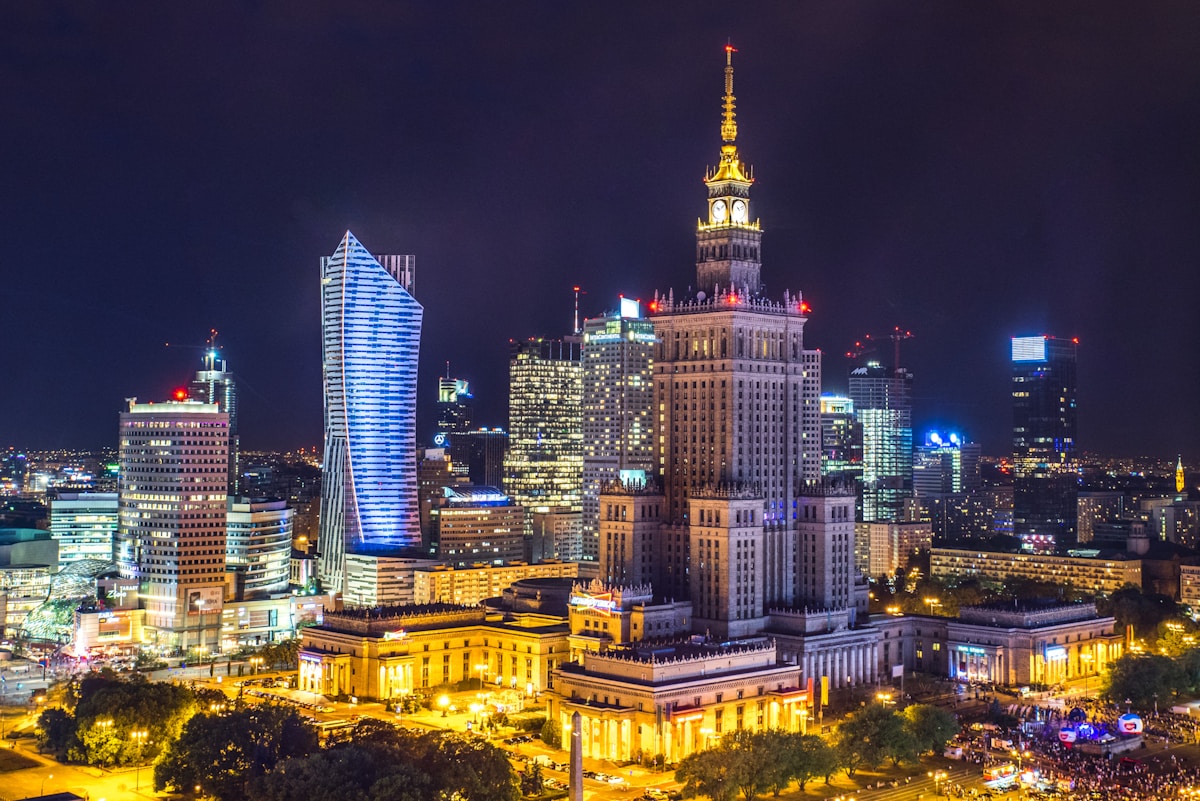
There is a statistic that stops people cold when they first hear it. Since 1990, Poland has grown its GDP by over 900 percent in real terms. No other country in Europe comes close. Germany grew by roughly 90 percent in the same period. France by about 80 percent. The UK by around 75 percent.
Poland grew by nine times.
That is not a typo, and it is not a trick of baseline math. Poland started from a genuinely low base in 1990 when communism collapsed, but the speed and consistency of what followed is extraordinary. The country did not experience a single year of recession between 1992 and 2019 - the longest unbroken growth streak of any economy in the European Union. It even grew through the 2008-2009 global financial crisis, the only EU member to do so.
So what is actually happening in Poland? And why does most of the Western world seem to not know about it?
The Starting Point: 1990
To understand Poland's growth, you have to understand where it started. In 1990, Poland was emerging from four decades of Soviet-style central planning. Factories were inefficient, infrastructure was crumbling, and a significant portion of state-owned enterprises were essentially worthless in a market economy. GDP per capita was around 30 percent of the Western European average.
The government - led largely by the Solidarity movement that had fought for and won freedom - made a decision that was controversial at the time and is still debated by economists: it implemented shock therapy. Rapid liberalization. Price controls removed almost overnight. State companies privatized quickly. Trade opened up. The currency was stabilized.
It was painful in the short term. There was unemployment and hardship in the early 1990s. But it laid the foundation for everything that followed.
EU Membership Was the Rocket Fuel
Poland joined the European Union in 2004, alongside nine other countries. It immediately became eligible for EU structural and cohesion funds - money designed to develop less wealthy member states by investing in infrastructure, education, and regional development.
Poland received more EU structural funds than any other country in the EU's 2007 to 2013 and 2014 to 2020 budgets. We are talking about hundreds of billions of euros. The country used these funds to build highways, modernize railways, renovate cities, upgrade universities, and develop industrial parks. If you drive through Poland today compared to 20 years ago, the transformation in physical infrastructure alone is stunning.
EU membership also meant open access to the single market - 450 million consumers. Polish manufacturers could sell freely into Germany, France, the Netherlands. Polish workers could take jobs anywhere in the EU and send remittances home. Polish companies could attract European investment without currency risk or market access friction.
The Manufacturing Powerhouse
Western European companies - particularly German ones - quickly discovered that Poland offered something irresistible: EU membership and standards, a highly educated workforce, and labor costs a fraction of what they would pay in Germany or the Netherlands. The result was a wave of nearshoring that transformed Polish manufacturing.
Today, Poland is one of the largest producers of furniture in the world. It is a major automotive parts manufacturer for Volkswagen, BMW, and Mercedes-Benz. It produces electronics components, chemicals, food products, and machinery. The country is deeply embedded in European supply chains in a way that makes it difficult to extricate - which is exactly the kind of economic stickiness that sustains long-term growth.
The difference between Poland and other low-cost manufacturing destinations is the quality of the workforce. Polish engineers, programmers, and technicians are exceptionally well-trained. Universities in Warsaw, Krakow, Wroclaw, and Poznan produce graduates who compete directly with those from Western European institutions - at a fraction of the salary cost.
Warsaw and Krakow: The Tech Hubs Nobody Talks About
Google has a major engineering center in Warsaw. Microsoft has a large presence. Amazon Web Services operates out of Poland. Samsung has its European R&D headquarters in Warsaw. Goldman Sachs has a large operations center. JP Morgan has significant presence.
These are not call centers or back-office facilities. They are genuine engineering and financial operations staffed by highly skilled Polish professionals. Warsaw has become one of Europe's top cities for financial services outsourcing - not because it is cheap (it is more expensive than it used to be) but because the talent pool is exceptional.
Krakow has developed its own tech identity, particularly in the games industry and cybersecurity. The city of Wroclaw has become a hub for semiconductor and electronics R&D. Gdansk - historically a shipbuilding city - now has a thriving maritime tech and logistics innovation scene.
Geopolitical Positioning After 2022
Russia's invasion of Ukraine in 2022 paradoxically accelerated certain aspects of Poland's economic rise. Companies that had been operating in or sourcing from Russia or Ukraine were forced to relocate. Poland - stable, in NATO, in the EU, and geographically close - became the obvious alternative for many of them.
Poland also became a critical logistics hub for humanitarian aid and military support flowing to Ukraine. Its ports, railways, and highways have handled unprecedented volumes of cargo. Polish defense spending surged - the country now spends about 4 percent of GDP on defense, the highest in NATO - which has stimulated domestic manufacturing and technology development.
Investors who might have been nervous about Poland's proximity to an active conflict zone have largely been reassured by NATO membership and the US military presence in the country. Poland has successfully positioned itself as a secure, stable investment destination even as the geopolitical situation around it remains tense.
Wages Have Risen - and That Is a Good Sign
One of the most significant economic shifts in recent years is that Polish wages have risen substantially. Average salaries in Warsaw now compare to peripheral Western European cities. This has reduced some of Poland's labor cost advantage in low-skill manufacturing - but that is actually a sign of success, not a problem.
The Polish economy is moving up the value chain. Lower-skill, lower-margin manufacturing is shifting to countries like Romania, Bulgaria, or Vietnam, while Poland is retaining and growing higher-skill, higher-margin industries: software development, financial services, advanced manufacturing, R&D. This is exactly the transition that successful developing economies make.
The Challenges
Poland has real issues it needs to work through. Demographics are a significant concern - the country has one of the lowest birth rates in Europe, and the emigration of young Poles to Western Europe after 2004 created a talent drain that has only partially reversed. The population is aging, and the pension system faces long-term pressure.
Rule of law and judicial independence have been contentious issues, putting Poland at odds with EU institutions and holding back some EU funding. The new government that came to power in late 2023 has made restoring EU relations a priority, and progress is being made - but it takes time.
Energy transition is another challenge. Poland remains heavily dependent on coal for electricity generation - more so than most EU members. Meeting EU climate targets while maintaining energy security (especially given the Ukraine war context) is a real tension that the country is navigating without easy answers.
The Bottom Line
Poland is one of the most compelling economic stories in the world right now, let alone in Europe. A country that was a communist planned economy 35 years ago has become the sixth-largest economy in the EU, a major tech hub, a manufacturing powerhouse, and a strategically critical member of both NATO and the European Union.
It did not happen by accident. It happened through consistent policy choices, smart use of EU resources, investment in education, and a workforce that simply outworks the competition. The growth rate has moderated as the economy has matured - you cannot grow at the same speed forever - but Poland is still growing faster than Germany, France, or the UK. That is not going to change anytime soon.
If you want to understand where European economic momentum lives in 2025, start by looking east. The story is in Warsaw.