
You already have an image of Mauritius in your head: pristine beaches, turquoise lagoon, luxury resorts. That image is accurate. What most people miss is everything else - the volcanic interior, the deep cultural hybridity, the food, the history, and a handful of genuinely strange natural phenomena that don't fit the brochure. Here's the full picture.
The Underwater Waterfall - An Optical Illusion Worth Seeing from the Air

Off the southwest coast of Mauritius, near the headland of Le Morne, the seafloor drops suddenly from the shallow lagoon shelf into the deep Indian Ocean. Sand and silt carried by ocean currents cascades off this shelf edge and plunges downward - and from above, seen from a helicopter or aerial photograph, it looks exactly like a waterfall descending into the ocean floor. It is an optical illusion, not an actual waterfall, but the effect is breathtaking from the air and strange and beautiful from the surface.
Helicopter tours from Sir Seewoosagur Ramgoolam International Airport offer this view; it's one of the most popular aerial excursions on the island.
Le Morne Brabant - The Mountain That Carries a Story

Le Morne Brabant is a basalt monolith rising 556m from the southwestern tip of the island, surrounded on three sides by ocean. It is a UNESCO World Heritage Site - not just for its dramatic scenery, but for what it represents. During the era of slavery in Mauritius (the island was a major slave-trading hub under French and then British colonial rule), escaped slaves called marrons hid in the caves and forests of Le Morne's nearly inaccessible walls. According to tradition, when emancipation was announced in 1835, a group of marrons on Le Morne saw British soldiers climbing toward them, believed they were about to be recaptured, and jumped to their deaths - not knowing they were already free.
Le Morne is now both a hike and a memorial. The trail to the summit is strenuous but manageable in a half-day with a guide; the views from the top take in the full sweep of the southwestern coastline and the lagoon.
The Seven Coloured Earths of Chamarel
In the southwest interior, a geological quirk has produced a small area of gently rippled dunes in seven distinct colours - red, brown, violet, green, blue, purple, and yellow - caused by the differential cooling and oxidation of volcanic basalt. Rain falls through it, wind crosses it, but the colours never permanently blend. Adjoining the dune field is the Chamarel Waterfall, an 80-metre drop into a forested ravine. The area is in a private nature park with entrance fee; it's about 20 minutes by car from the coast at Flic en Flac.
The Black River Gorges - Mauritius' Wild Interior
Most visitors don't leave the coast. Those who do discover that the interior is covered by Black River Gorges National Park, a hilly, forested reserve that protects what remains of Mauritius' native forest - including populations of the echo parakeet (once down to fewer than 10 individuals in the wild, now recovered to several hundred), the Mauritius kestrel (a similar story, considered the most successful conservation recovery of any bird species), and the pink pigeon. Trails through the gorges range from easy walks to full-day ridge hikes with sweeping views down to the coast.
The Dodo - Gone, But Not Forgotten

The dodo (Raphus cucullatus) was a flightless bird endemic to Mauritius, standing roughly a metre tall, that became extinct around 1662 - less than a century after Dutch sailors first landed on the island. It is the most famous example of human-caused extinction in recorded history, the symbol of lost biodiversity, and a permanent part of Mauritius' identity. The Natural History Museum in Port Louis holds a reconstructed dodo skeleton and exhibits on the island's extraordinary natural history.
The Food - A Cuisine the World Doesn't Know Enough About
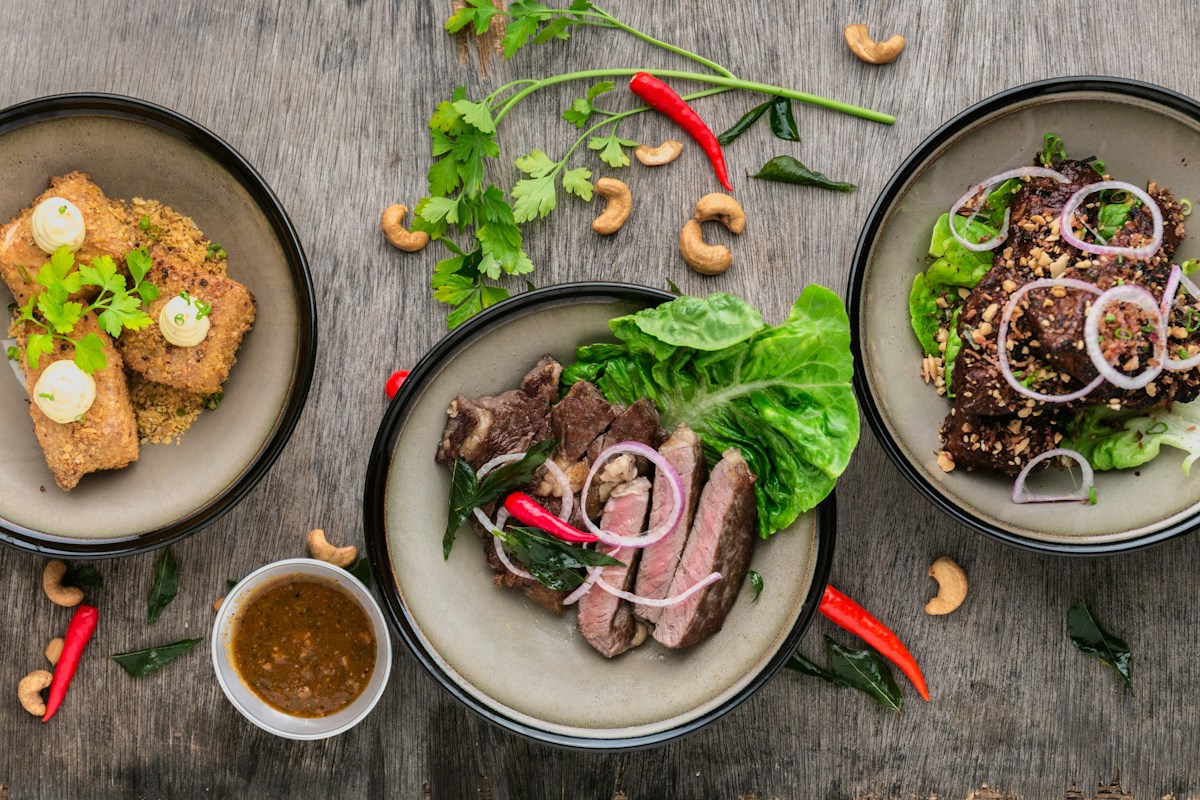
Mauritius was uninhabited until the 17th century, then settled by the Dutch, French, British, and - traumatically - large populations brought over as enslaved workers from Africa and Madagascar, followed by indentured labourers from India and workers from China. The result is one of the most genuinely diverse food cultures in the Indian Ocean:
- Dholl puri - flatbread stuffed with yellow split peas, rolled up with curry, pickles, and rougaille (a Creole tomato sauce). The most popular street food on the island and absolutely worth seeking out.
- Mine frit - Mauritian-Chinese fried noodles, lighter and more fragrant than their mainland Chinese counterparts.
- Rougaille - the foundational Creole sauce (tomato, ginger, thyme, garlic, chilli) used with fish, sausage, shellfish.
- Biryani - the Mauritian version absorbs both South Indian and Creole influences and is cooked with saffron-stained rice and slow-cooked meat.
- Gâteaux piments - small fried chilli cakes sold at almost every roadside stall. Addictive.
- Rum - Mauritius produces agricultural rum (rhum agricole) from fresh sugarcane juice. Chamarel Rum Distillery in the southwest offers tours and tastings; their aged rums are outstanding.
Port Louis

The capital is a working city, not a resort - and better for it. The Central Market is one of the best in the Indian Ocean: fresh fish, tropical fruit, spices, saris, and street food packed into a Victorian-era building. The Caudan Waterfront has restaurants and the Blue Penny Museum, which holds two of the world's rarest postage stamps (the original 1847 Mauritius Post Office stamps, worth millions each). The Aapravasi Ghat - the original immigration depot where indentured labourers first arrived from India - is a UNESCO World Heritage Site and a sombre, important memorial.
The Beaches - Since You Were Going to Ask Anyway

Yes, they are as good as advertised. The best are:
- Belle Mare (east coast) - long, white, calm lagoon, palm-backed. The classic postcard beach.
- Flic en Flac (west coast) - the longest beach on the island, popular with locals and tourists alike. Great at sunset.
- Blue Bay (south coast) - a marine park with coral reef; excellent snorkelling directly from the beach, with protected turtle habitat.
- Île aux Cerfs - an island off the east coast accessible by boat from Trou d'Eau Douce. The sandbanks and shallow water here are extraordinary.

Practical Information
- Getting there: Sir Seewoosagur Ramgoolam International Airport (MRU) has direct flights from Paris, London, Dubai, Singapore, Johannesburg, and Mumbai, plus connections across Africa and Asia.
- Visa: Visa-free for most nationalities for up to 90 days.
- Best time: May through November is the cooler dry season and the best time to visit. May-June and September-October are the sweet spots - pleasant weather, fewer crowds than peak European summer. December-April is warmer and wetter, with cyclone risk peaking in January-March.
- Currency: Mauritian Rupee (MUR). Euros and USD exchanged easily; cards accepted widely.
- Getting around: Rental car is the best option for flexibility. Buses cover most of the island cheaply but slowly. Taxis are plentiful but negotiate fares upfront.

Mauritius does quiet competence across many categories simultaneously - beautiful coastline, fascinating history, extraordinary food, unique wildlife, and a level of safety and infrastructure rare in the Indian Ocean. The surprise is how much there is beyond the beach, and how few of the people lounging on those beaches ever bother to find out.