
Goa has been India's designated escape hatch for decades. British package tourists in the 1980s and 90s. Israeli backpackers on their post-army trip. Russian charter flights in the 2000s and 2010s. Domestic Indian tourists who've discovered it more recently. The result is a state that has been thoroughly touristed, somewhat commercialized, and yet still — in ways that surprise visitors — retains a personality unlike anywhere else in India.
North vs. South: Two Very Different Goas
North Goa — beaches like Baga, Calangute, Anjuna, Vagator — is the party zone. Beach shacks pumping trance music, tattoo parlors, souvenir markets, full-moon parties, charter resort hotels. It can be fun. It's also crowded, occasionally chaotic, and has the feel of a destination that knows it's a destination.
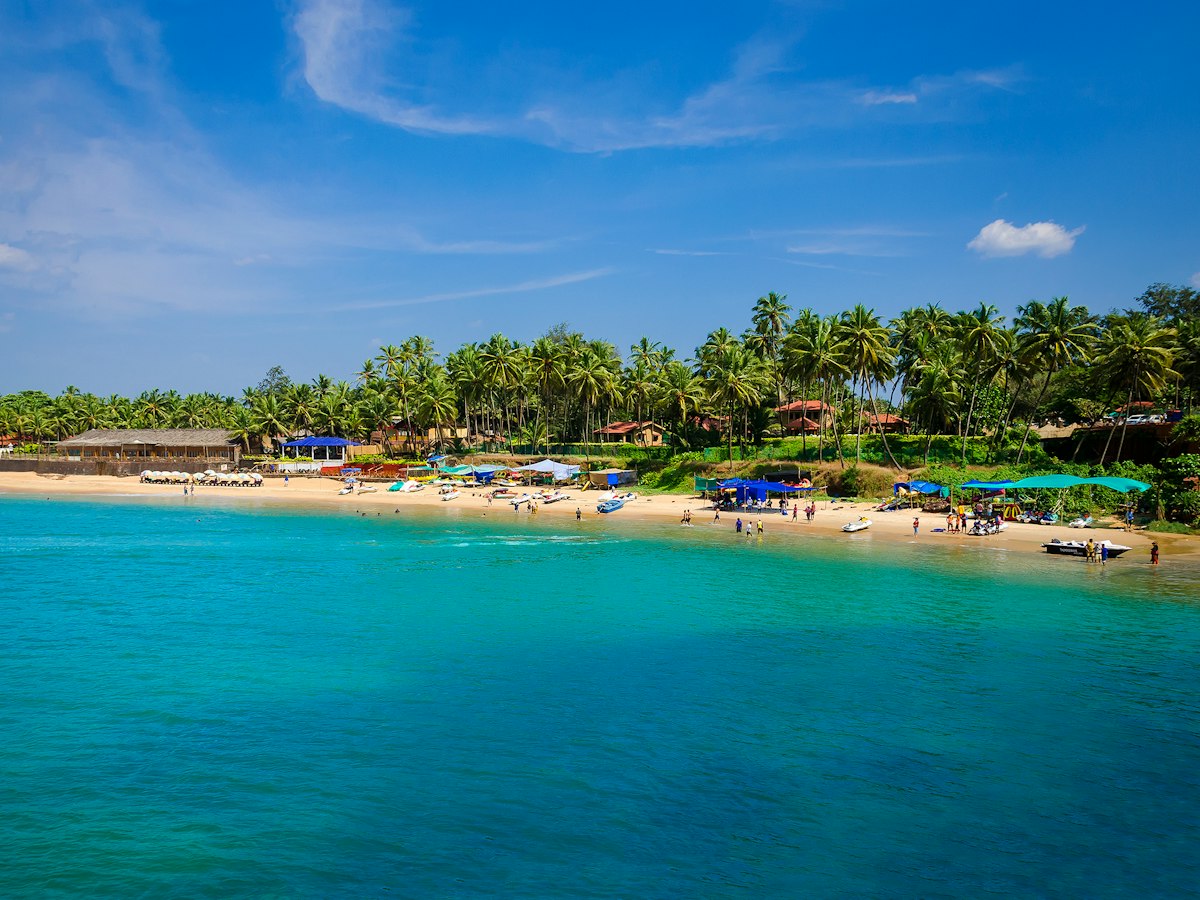
South Goa is a different proposition. Beaches like Palolem, Agonda, and Cola have a calmer character: smaller beach shacks, paddy fields behind the sand, fewer thumping clubs. Agonda in particular is popular with the yoga-retreat and long-stay crowd. Cola (technically Khola) requires a short hike or jeep ride and has a freshwater lagoon separated from the sea by a sand bar — one of Goa's genuinely beautiful spots.

The Portuguese Inheritance
Goa was a Portuguese colony from 1510 until 1961 — over 450 years, far longer than British India. The Portuguese left an architecture, a cuisine, a religion (Goa is roughly 26% Christian, compared to about 2% for India overall), and a cultural hybrid that is genuinely unlike the rest of India. Old Goa, the former colonial capital, has a UNESCO-listed cluster of 16th and 17th-century churches that wouldn't be out of place in Lisbon — the Basilica of Bom Jesus (containing the remains of St. Francis Xavier), the Se Cathedral (the largest church in Asia when it was built), and the Church of St. Francis of Assisi.
The Goan village house style — low-slung, Portuguese-influenced, tiled roofs, wide verandas — is distinctive and beautiful. In the interior, in villages like Fontainhas in Panaji (Goa's charming, bijou capital), it's well-preserved and genuinely lovely to walk.
The Food

Goan food is a genuine Indo-Portuguese fusion and it's exceptional:
- Vindaloo: not the British curry house version but the original — pork marinated in vinegar (from the Portuguese vinho) and spices, intensely flavored and sour-hot
- Fish curry rice: the Goan everyday meal — a coconut-milk fish curry over rice, eaten at lunch by virtually every Goan daily
- Bebinca: a layered Goan dessert of coconut milk, flour, egg yolks, and ghee baked in seven or more layers — rich, patient, and distinctive
- Feni: a distilled spirit made from cashew apple or coconut — Goa's artisanal alcohol, legally geographically restricted to the state. The cashew variety is better.
Nature Beyond the Beach

Inland Goa is underexplored by most visitors. Dudhsagar Falls — one of India's tallest waterfalls at 310 meters — is accessible by jeep tour or train through the Western Ghats forest. The falls are best in and just after monsoon. Bhagwan Mahavir Wildlife Sanctuary has leopards, gaurs, and sloth bears in the forest that separates Goa from Karnataka.
When to Go and What to Watch For

Peak season is November–February: cool, dry, and full. Shoulder season is October and March. Monsoon (June–September) is when most beach shacks close, prices drop dramatically, and the landscape turns a vivid green — a few travelers visit intentionally for the dramatic rain and empty beaches.
Petty theft from beach bags and motorcycle taxi overcharging are the main tourist annoyances. Drug availability is high and drug laws are real — possession carries serious penalties. Water quality at beach shacks varies; choose busy, high-turnover places for seafood.
Goa is not the hidden gem it once was. But it remains one of the most pleasurable places to spend a week in India — particularly if you use it as a base to understand that the beaches are only the surface of a much more layered place.