Andorra may receive 8 million visitors per year, but the people who actually live there year-round number only around 77,000 — making it one of Europe's least populous sovereign states. The story of who lives in Andorra, how they got there, and what it means to be Andorran is one of the most unusual demographic situations in Europe.
Total Population and Trends
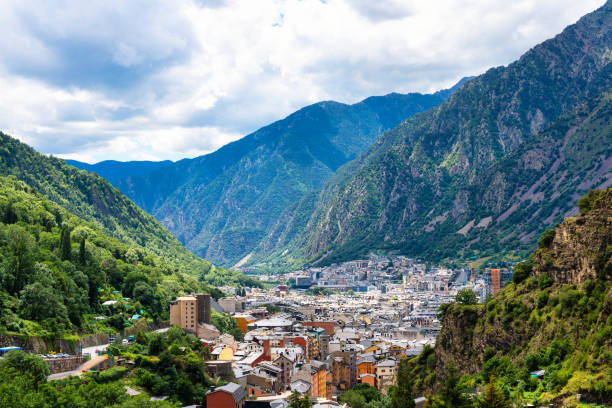
Andorra's permanent resident population is approximately 77,000–80,000 (2024 estimates), distributed across the country's seven parishes (parròquies). The capital, Andorra la Vella, is the most populous with roughly 22,000 residents; the commercial-leisure corridor of Escaldes-Engordany adds another 15,000. The remaining population is distributed across the parishes of Sant Julià de Lòria, la Massana, Ordino, Canillo, and Encamp.
Population growth has been modest but consistent — Andorra grew from roughly 35,000 in 1970 to its current figure, fueled primarily by immigration rather than natural increase.
Nationality Breakdown: Andorrans Are the Minority
The most striking demographic fact about Andorra is that Andorran nationals are a minority in their own country — comprising approximately 30–33% of the resident population. The remaining 67–70% hold foreign nationality:
- Spanish nationals: approximately 30–35% of total residents — the single largest foreign group, primarily from Catalonia and Aragon, reflecting Andorra's deep historical and geographic ties to Spain
- Andorran nationals: approximately 30–33%
- Portuguese nationals: approximately 12–15% — a significant community with roots in mid-20th century labour migration when Andorra's construction and hospitality sectors boomed
- French nationals: approximately 5–7%
- Other nationalities: approximately 10–15% — including growing communities from the UK, Argentina, various EU states, and recent arrivals drawn by Andorra's tax residency status
This foreign-majority situation is unusual even by the standards of small states and creates interesting political dynamics: non-nationals pay taxes and contribute economically but until recently had very limited political rights. Since 2022, naturalized Andorrans have broader civic participation pathways, but full Andorran nationality — with voting rights in national elections — remains significant as a status marker.
The Catalan Language Question
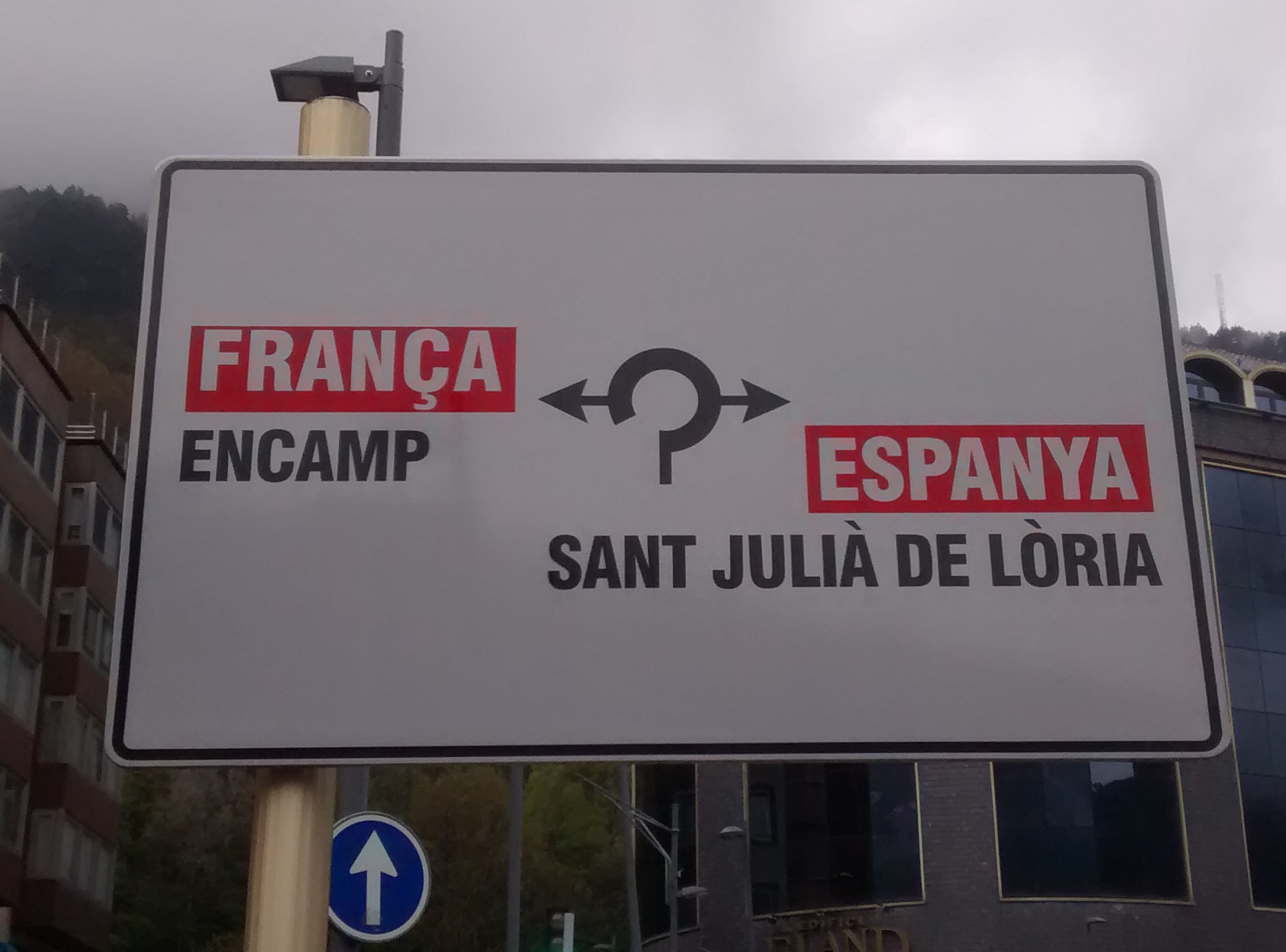
Andorra is the only country in the world where Catalan is the sole official language. This is not a formality — Andorra's government, courts, education system, and official communications operate in Catalan. Catalan is the language of Andorran identity in a way that creates an interesting counterpoint to Catalonia itself, where Catalan's official status is contested within Spain.
In practice, everyday life in Andorra is multilingual. Spanish is spoken everywhere (by the largest single community), Portuguese is widely heard, and French is the working language with the northern border area. English is functional in tourism contexts. But Catalan is the thread that holds official Andorran identity together — school instruction is in Catalan, road signs are in Catalan, and any interaction with the Andorran government is formally conducted in Catalan.
How to Become a Resident of Andorra
Andorra has specific residency categories, and the barriers to formal Andorran residency are non-trivial:
- Active residency (with work): Requires a valid employment contract with an Andorran company or registration as an Andorran business entity. Non-EU nationals face significant additional requirements
- Passive residency (without working): Requires proof of sufficient income/assets, a minimum investment of €50,000 with the Andorran government, and a physical presence requirement (at least 90 days per year in Andorra). This category has attracted significant interest from high-net-worth individuals from EU countries seeking lower tax environments
- Andorran nationality: Requires 20 years of continuous legal residence (for most foreigners) or 10 years for spouses of Andorrans. Until those thresholds are met, long-term residents are permanent residents, not citizens. This unusually long naturalization path explains why Andorran nationals remain a minority despite many families having lived in Andorra for generations
Tax Residency — The Driver of Recent Growth
Andorra's income tax rate tops out at 10% (compared to 45–50% in France and Spain). Capital gains taxes are very low; inheritance taxes are minimal; there is no wealth tax. For high earners — athletes, entertainers, remote workers, business owners with EU income — Andorra's tax structure represents a dramatic improvement over any EU alternative while remaining physically close to European cultural and lifestyle centres.
The number of requests for passive residency ("tax residency") applications has grown substantially since the COVID-19 pandemic, particularly from remote workers in tech, finance, and content creation who can work from anywhere. Andorra's combination of mountain lifestyle, safety, good internet infrastructure, and EU-adjacent geography (direct access into France and Spain, Schengen free movement) has made it an increasingly compelling relocation destination.
Daily Life in a Country of 77,000

Life in Andorra has a particular character that its small size determines. Everyone tends to know everyone — or know someone who knows everyone. The country has two hospitals, one university (Universitat d'Andorra, founded 1997), several secondary schools, and most of the civic infrastructure of a much larger territory but at a scale that makes it feel genuinely intimate.
Shopping is central to both the economy and social life. But residents also participate in a strong local cultural scene: the Andorra la Vella sports complex, music festivals, hiking club culture (the Andorra mountain environment is deeply embedded in local life), and the skiing culture that defines winters. The Andorran national football team competes (earnestly if not always successfully) in UEFA qualifiers, and local sports clubs in football, basketball, and cycling have passionate followings.
Religion and Civic Life
Andorra is a predominantly Roman Catholic country — Catholicism is embedded in the constitutional co-principality structure (the Bishop of Urgell is literally a co-prince). The country's parish structure maps to the ecclesiastical parishes. The church plays a visible role in festivals, civic ceremonies, and the calendar. That said, there is no state religion in the formal constitutional sense, and the population — with its large immigrant communities from secular European countries — is religiously diverse in practice.