Most people imagine the desert when they think of Algeria, and they're not wrong since the Sahara does cover 80% of the country. But Algeria's natural diversity goes beyond sand dunes. From lush coastal forests to snow-capped mountains to volcanic rock formations, Algeria is a nature lover's paradise waiting to be discovered.
The Mediterranean Coast
Algeria's 745-mile (1,200-kilometer) coastline stretches from the Moroccan border to Tunisia and features rugged cliffs, hidden coves, and turquoise waters. Some natural highlights include:
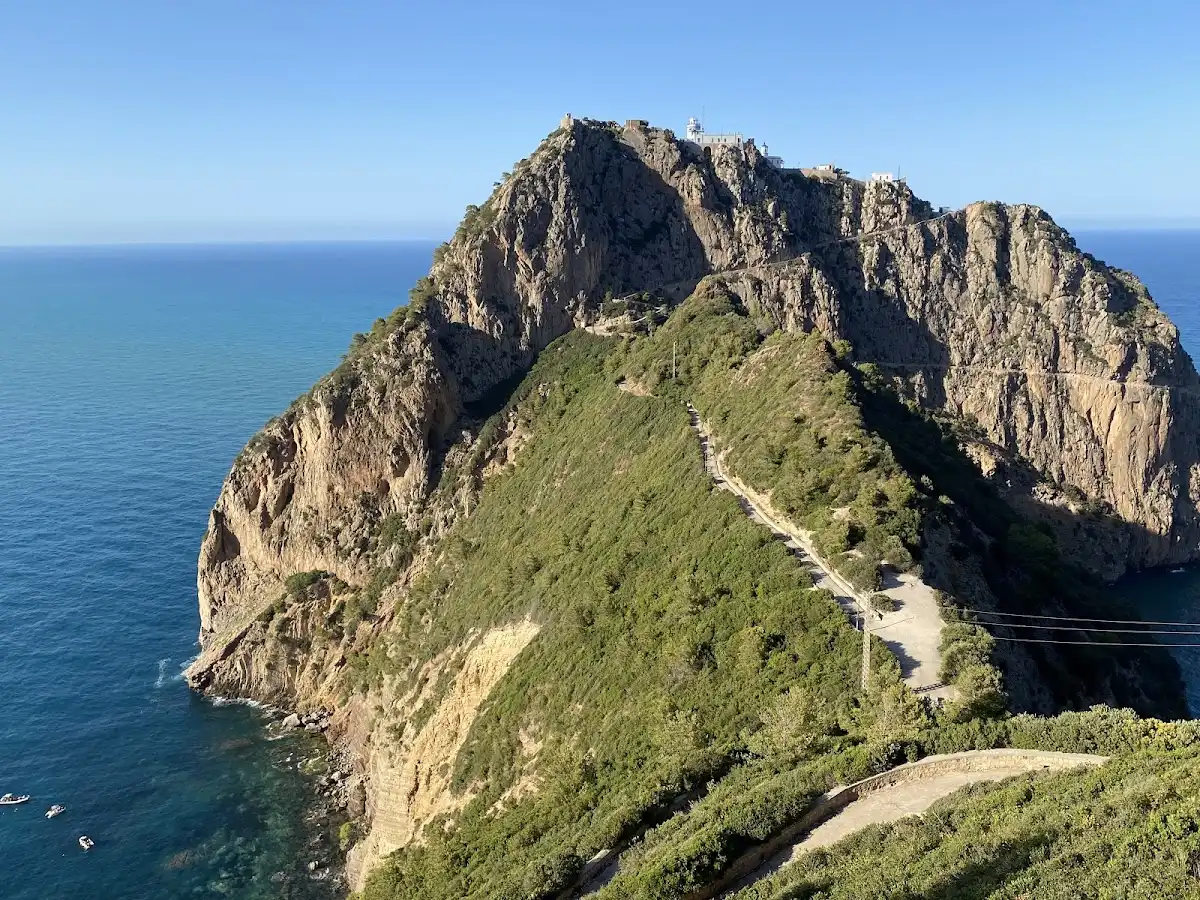
- Gouraya National Park (Béjaïa): Lush Mediterranean forests meet the sea here. This area is home to Barbary macaques—the only wild primates in Africa north of the Sahara—and Cap Carbon's dramatically steep cliffs offer spectacular sea views.
- Jijel Corniche: Features dramatic limestone cliffs, sea caves, and some of Algeria's finest beaches along the Ziama Mansouria coastline.
- El Kala National Park: Located near the Tunisian border, this UNESCO Biosphere Reserve contains Africa's largest freshwater lake (Lake Tonga) and Mediterranean fens, providing a vital haven for migratory birds like flamingos, herons, and storks.
The Atlas Mountains
Two major mountain ranges cross northern Algeria:
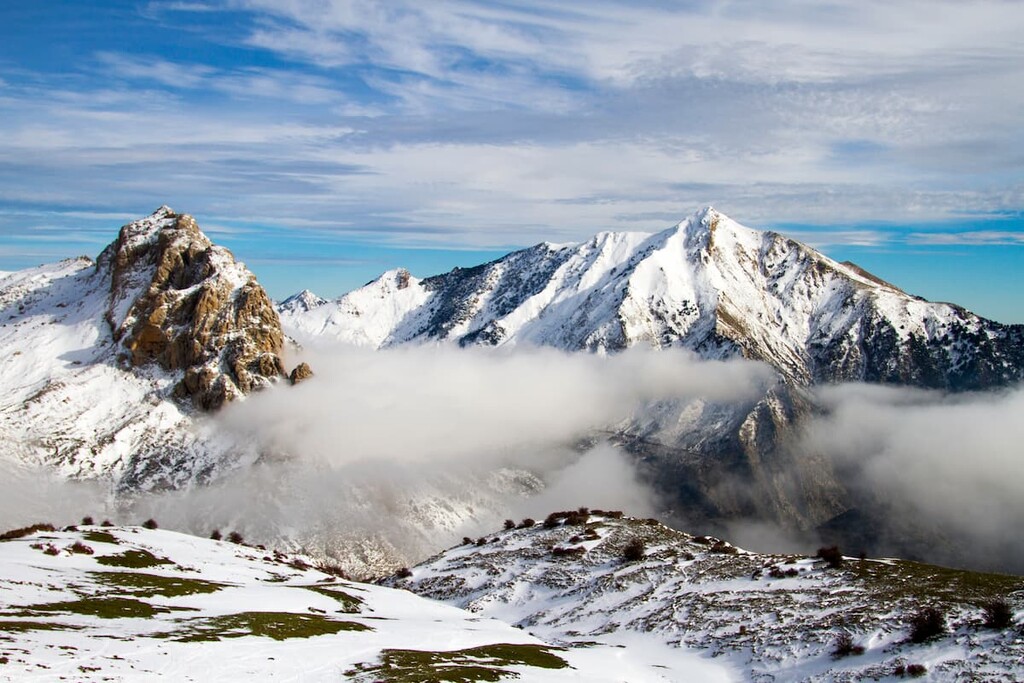
- Tell Atlas: Running along the coast and peaking at Lalla Khedidja in western Kabylie, this range features dense forests of cork oak, Aleppo pine, and cedar. Djurdjura National Park is Algeria's premier mountain hiking destination, known for deep gorges, winter snow, and hilltop Berber villages.
- Saharan Atlas: The southern range separates the coast from the desert. The Aurès Mountains around Batna offer stunning canyon scenery, including the Guelma Gorge and Rhoufi Canyon.
The Sahara
Algeria holds the largest portion of the Sahara Desert of any country. Key highlights include:
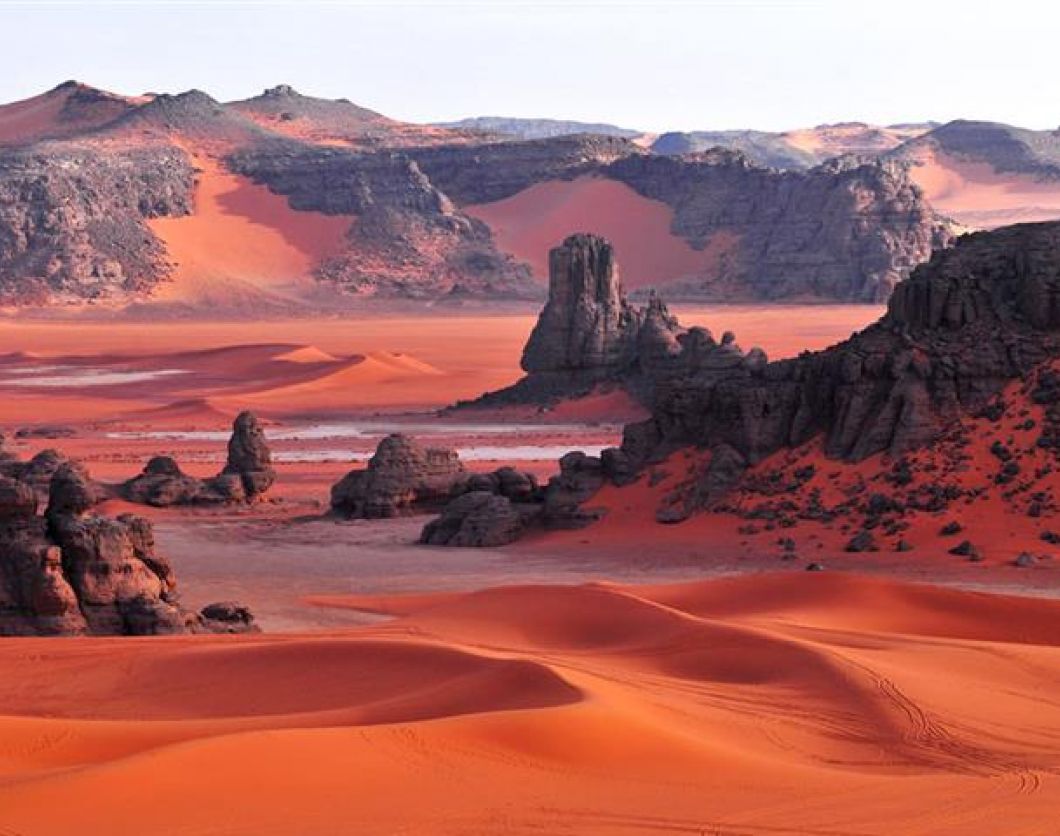
- Erg (Sand Seas): The Grand Erg Oriental and Grand Erg Occidental consist of vast, towering sand dunes. The dunes near El Oued glow deep orange at sunset.
- Tassili n'Ajjer: A vast sandstone plateau carved by wind and water into pillars, arches, and canyons. A UNESCO World Heritage Site, it features over 15,000 prehistoric rock art carvings and paintings.
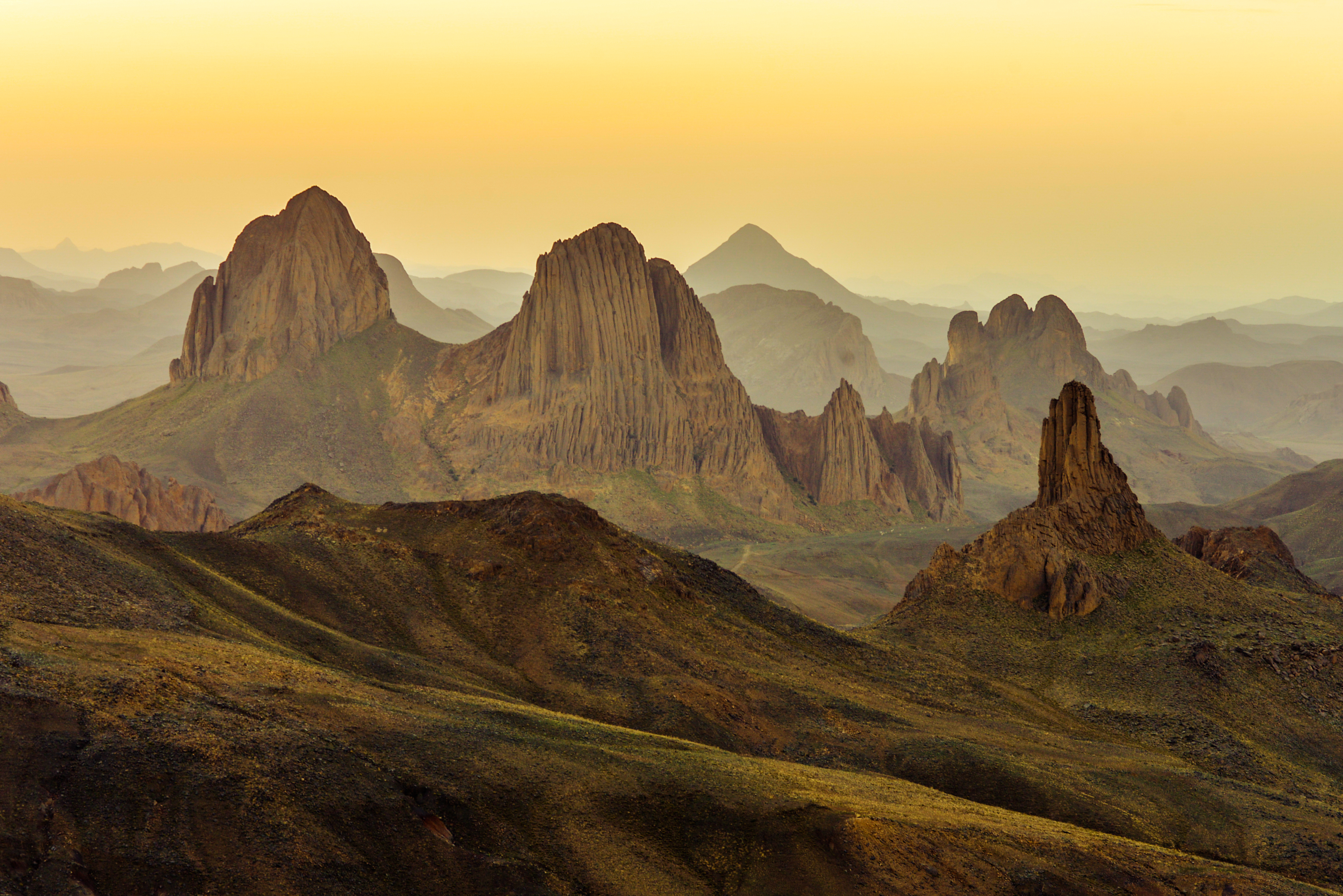
- Hoggar Mountains: A volcanic range in the central Sahara hosting Mount Tahat, Algeria's highest peak. The landscape is otherworldly with black basalt fields, sharp spires, and sweeping desert vistas inhabited by the Tuareg people.
- Guelta d'Archei (Nearby): While located just across the border in Chad, Algeria has its own rare desert gueltas (rocky waterholes) where life gathers in the open desert.
Wildlife
Algeria's varied ecosystems support a wide range of native species:
- Barbary Macaque: Endangered primates inhabiting the Kabylie and Chréa forests, representing the only wild primate native to North Africa.
- Fennec Fox: Algeria's national animal, this small, big-eared desert fox thrives across the Saharan dunes.
- Barbary Deer (Atlas Deer): North Africa's only native deer species, protected in the El Kala region.
- Addax & Dorcas Gazelle: Rare desert antelopes adapted to extreme arid conditions in the deep south.
- Birdlife: Over 400 species recorded, including flamingos at Lake Tonga, golden eagles in the Atlas Range, and desert-adapted species across the south.
National Parks
Algeria has 11 designated national parks. Among the most rewarding to visit are:
- Tassili n'Ajjer National Park: Saharan rock art, sandstone canyons, and ancient desert ecology.
- Djurdjura National Park: Alpine hiking, winter snow, and historic Berber culture.
- Gouraya National Park: Mediterranean coastal cliffs, beaches, and Barbary macaques.
- El Kala National Park: Freshwater lakes, coastal wetlands, and migratory birdwatching.
- Chréa National Park: Ancient cedar forests near Algiers, offering a mountain escape close to the capital that sees winter snowfall.